Ask ChatGPT for the best stability running shoe for a heavy overpronator, and it will answer in under ten seconds. Three brands. Three models. Pros and cons laid out like a crisp mini-review. The shopper never opens a browser tab. They never land on your product page. They never see your retargeting ad. And if your shoe is missing from the three, your catalog was invisible at the exact moment of purchase.
This shift is now measurable. Data from Adobe shows that AI-sourced traffic to U.S. retail sites grew 393% year over year in Q1 2026. Adobe also reports that 39% of consumers have already used AI assistants for online shopping, and 85% of those users say it improved the experience. This is also showing up at the conversion layer. According to Alhena’s report on consumer behavior in AI-led shopping, LLM traffic converts at 2.47%, outperforming both Google Ads and Meta traffic.
That is the quiet disruption footwear brands are walking into right now. Buying a shoe remains one of the most consideration-heavy decisions in consumer commerce. It is built on pronation, arch type, drop, stack height, last shape, terrain, weather, use-case, and whether a pair runs true to size. The shoe buyer has always wanted to ask an expert. Now that expert is available at any hour.
Discovery is moving from SEO to AEO and GEO
SEO, the game of ranking a blue link on a results page, is giving way to two new disciplines. Answer Engine Optimization, or AEO, is the practice of getting your products cited inside AI-generated answers. Generative Engine Optimization, or GEO, shapes how AI systems describe your brand. This shift is happening at a massive scale. Google reports that AI Overviews now reach over 2 billion monthly users across more than 200 countries and territories, with AI-native search experiences continuing to expand.
A shopper asking “what are the best trail running shoes under $150?” now reads one paragraph of curated recommendations. If your competitor or your top seller’s alternative is missing from that paragraph, ranking on a traditional results page carries far less weight. Most footwear brands are still optimizing for the old shelf while the new one, inside the AI answer, is being claimed in real time.

The gaps most footwear brands are missing
There are four blind spots where footwear retailers are losing ground.
1. Brand-level tracking is a trap
Footwear catalogs are deep and fragmented. A performance brand may carry dozens of running models across stability, neutral, racing, and trail. Each comes with width, size, and colorway variations. “Brand mentioned” reveals very little. It does not tell you whether ChatGPT recommended your Clifton to a recovery runner or surfaced a competitor’s Vomero instead. Footwear runs on variants. Visibility tracking needs to run on variants as well.
2. The gap between being named and being sold
A mention can take many forms. Your shoe may appear as a rich product card with price, ratings, and positioning. It may also appear as a passing reference. Those outcomes drive different revenue. AI-referred users already show stronger buying intent. Adobe found that AI-driven visitors spend 48% longer on site, view 13% more pages, and show higher engagement overall. This is where rendering analysis becomes critical. Which SKU appeared? Was pricing shown? Was it framed as premium, value, or performance? Was it the primary recommendation? In footwear, positioning signals carry weight. Stability versus neutral. Max cushion versus responsive. Trail versus road.
3. The external sources influencing your visibility
AI shopping answers draw from sources beyond your product pages. These include gear review sites, retailer guides, YouTube reviews, and community discussions. Footwear has a specific challenge. Models evolve annually. Foam compounds change. Fit profiles shift. Older reviews can still shape perception. Brands need to map these sources, identify outdated narratives, and prioritize updates where it matters.
4. The gap between analytics and action
This is where most programs stall. A dashboard shows a visibility score. The next step is execution. Knowing you are absent from “best trail runners under $150” matters for a short window. Sustained impact comes from tying each insight to action. Platforms like Alhena are built around this loop. Visibility signals translate into specific actions across product pages, FAQs, and external sources, connecting insight directly to revenue impact.
Why horizontal AEO tools fall short
A growing set of AEO tools track AI mentions and produce visibility scores. They operate outside the store. They miss a key input – Real shopper questions. On-site behavior reveals intent with precision. Shoppers compare the Ghost(product A) to the Pegasus(product B). They ask about sizing, cushioning, and fit. These questions form the foundation of citation-ready content. The most effective architecture combines AI visibility tracking with an on-site assistant. The assistant captures real queries. The visibility layer feeds optimized answers back into the catalog.
This is the model implemented by Alhena, where on-site conversations directly inform off-site AI visibility.
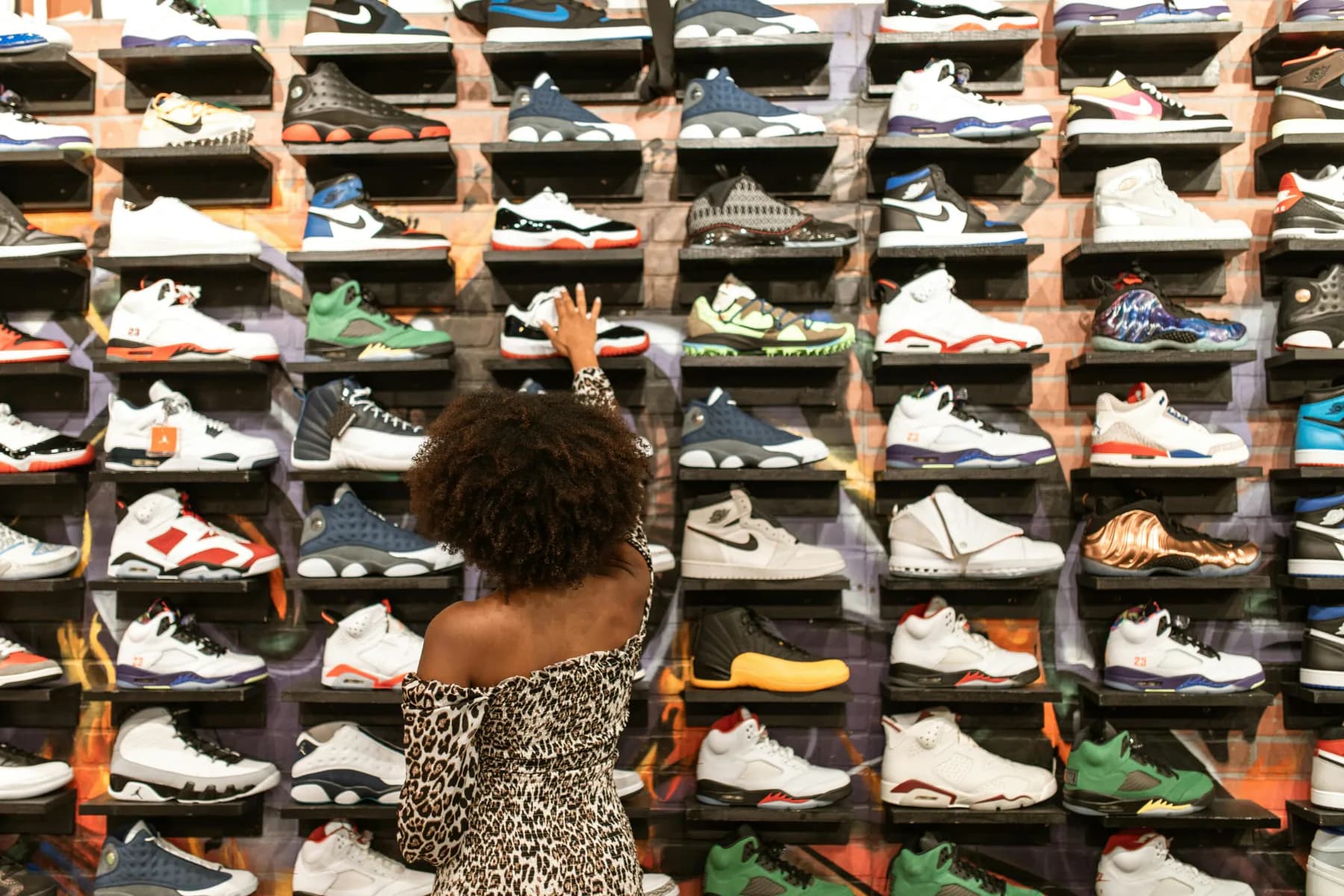
Leading brands are addressing analytics and content together. They track traffic from AI platforms and treat them as measurable acquisition channels. They track performance at the SKU level to understand which models win specific queries.
And they use these insights to fixing the content gap
Improving PDP contentSurfacing structured attributes early like Drop, stack height, weight, width options, and use-case guidance.
Adding Product FAQsStructured Q and A pairs aligned with real shopper questions.
Leverage Third-party influenceUpdate outdated reviews and engage key editorial sources.
First-party editorialBuying guides and comparison content hosted on your domain.
The AI shelf is still up for grabs
A new shelf has emerged inside AI answers. It is limited to a handful of recommendations. Footwear brands understand shelf competition in physical retail. The same principle applies here. Most brands have yet to track SKU-level AI visibility, audit rendering, or connect shopper data to AI outputs. That creates a window.