
Texas AG Ken Paxton Opens A Formal PFAS Investigation Into Lululemon’s Activewear Claims
Texas Attorney General Ken Paxton launched a formal consumer protection investigation into Lululemon on April 13, 2026, issuing…

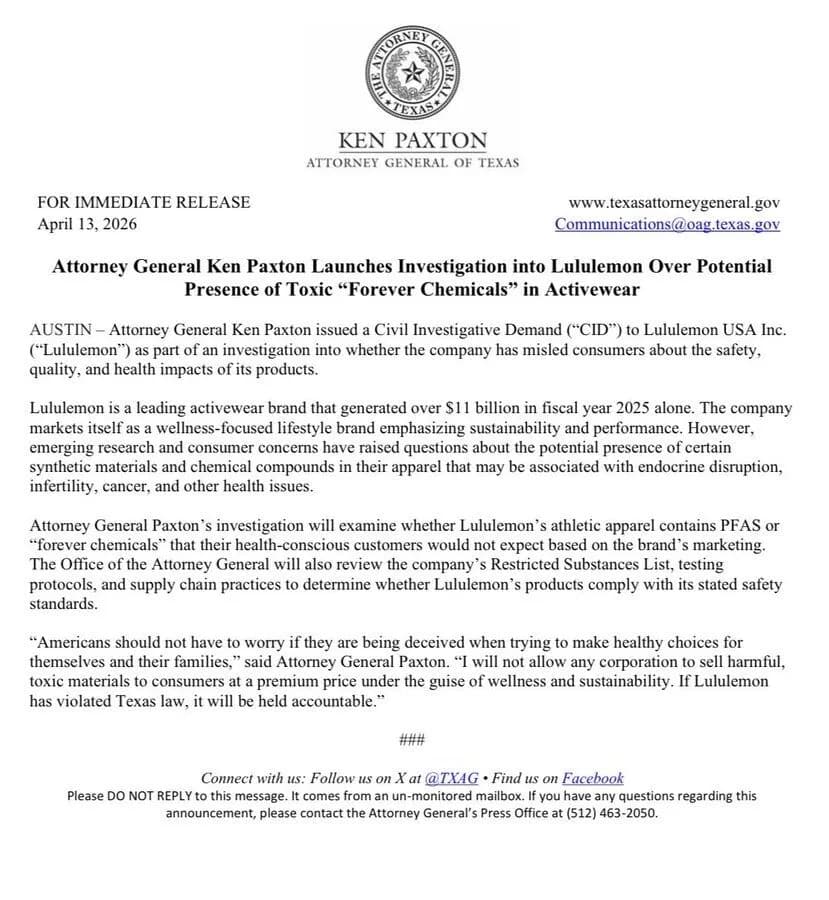
Texas Attorney General Ken Paxton launched a formal consumer protection investigation into Lululemon on April 13, 2026, issuing a Civil Investigative Demand. A subpoena level legal instrument that compels the company to hand over documentation before any formal lawsuit is filed. The probe centers on per- and polyfluoroalkyl substances, known as PFAS or “forever chemicals,” and whether Lululemon misled consumers about their presence in its activewear. Lululemon flatly denies the premise, stating it fully phased out PFAS by early 2024.
What The Investigation Requires
Paxton’s office has directed Lululemon to produce its Restricted Substances List, testing protocols, and supply chain documentation, materials that would allow investigators to cross reference the brand’s internal safety practices against its public sustainability and wellness marketing.
Paxton said in a statement, “I will not allow any corporation to sell harmful, toxic materials to consumers at a premium price under the guise of wellness and sustainability. If Lululemon has violated Texas law, it will be held accountable.” The investigation remains active, and no formal charges have been filed.
Credit: Attorney General Ken Paxton
The Prior Testing Evidence
The concern has a documented history. In 2022, environmental publication Mamavation partnered with Environmental Health News to test 32 pairs of workout leggings, purchased from retailers including Amazon and Nordstrom, at an EPA certified laboratory. The crotch region of each garment was tested specifically for organic fluorine, a reliable PFAS indicator. Of the 32 garments tested, 25 percent returned detectable fluorine levels ranging from 10 to 284 parts per million, with a Lululemon Align High Rise pant registering 32 parts per million. Researchers noted the pattern suggested intentional fabric treatment rather than accidental contamination.
Paxton said in a statement, “Americans should not have to worry if they are being deceived when trying to make healthy choices for themselves and their families.“
The Regulatory Landscape
PFAS are a family of more than 10,000 synthetic compounds used in consumer products since the 1940s. The CDC states most Americans already have measurable PFAS levels in their blood, with prolonged exposure linked to endocrine disruption, reduced immune response, reproductive harm, and elevated cancer risks. The EPA finalized its first enforceable national drinking water PFAS limits in April 2024, and California introduced legislation in January 2025 banning activewear products intentionally containing PFAS, effective in 2028. Seven other states have PFAS textile restrictions taking effect in 2026, and the Texas investigation adds a consumer deception framing on top of the emerging regulatory one.
The probe arrives at a delicate moment for Lululemon, which has built its brand around a wellness first identity and premium pricing. Whether the investigation produces formal charges or not, the scrutiny adds public pressure on a company whose marketing language, health, performance, and sustainability are precisely what Paxton’s office is questioning.