Insolia Is Challenging Decades of Athletic Footwear Design by Focusing on What Happens Inside the Shoe
For more than two decades, Insolia has been quietly influencing the footwear industry through biomechanical innovations designed to…
For more than two decades, Insolia has been quietly influencing the footwear industry through biomechanical innovations designed to enhance comfort, movement, and foot function. Founded on research into gait mechanics and foot anatomy, the company has developed patented technologies that help optimize how the foot interacts with the shoe, an approach that has been incorporated into millions of pairs of footwear worldwide.
A new wave of biomechanical thinking, suggests that athletic shoe design may have overlooked the single most important factor in performance and injury prevention: what happens inside the shoe. 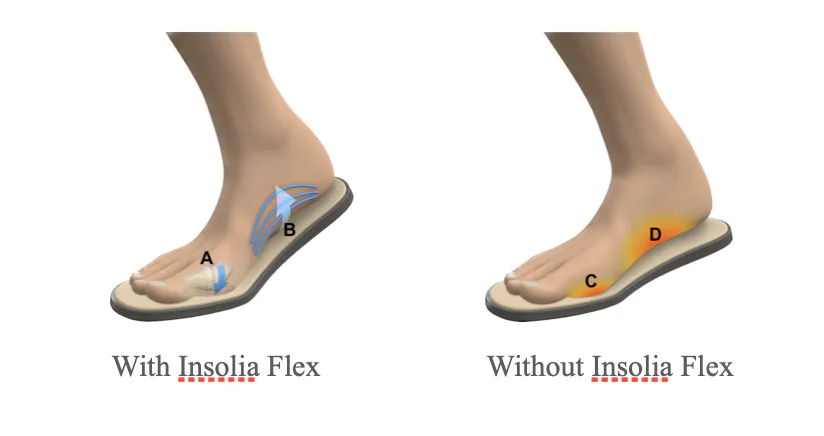
The Flawed Foundation of Modern Footwear
Most athletic shoes today are built on a simplified assumption that the foot functions as a rigid block. This model has shaped everything from midsole construction to stability features, prioritizing how the shoe interacts with the ground rather than how the foot behaves within it.
But the human foot is anything but rigid. It is a dynamic system of 26 bones, ligaments, and 33 joints working in coordination to absorb impact, distribute force, and propel the body forward.
Engineer Brian Hughes and podiatrist Dr. Howard Dananberg argue that by ignoring this internal complexity, the industry may have unintentionally engineered conditions that contribute to injury.
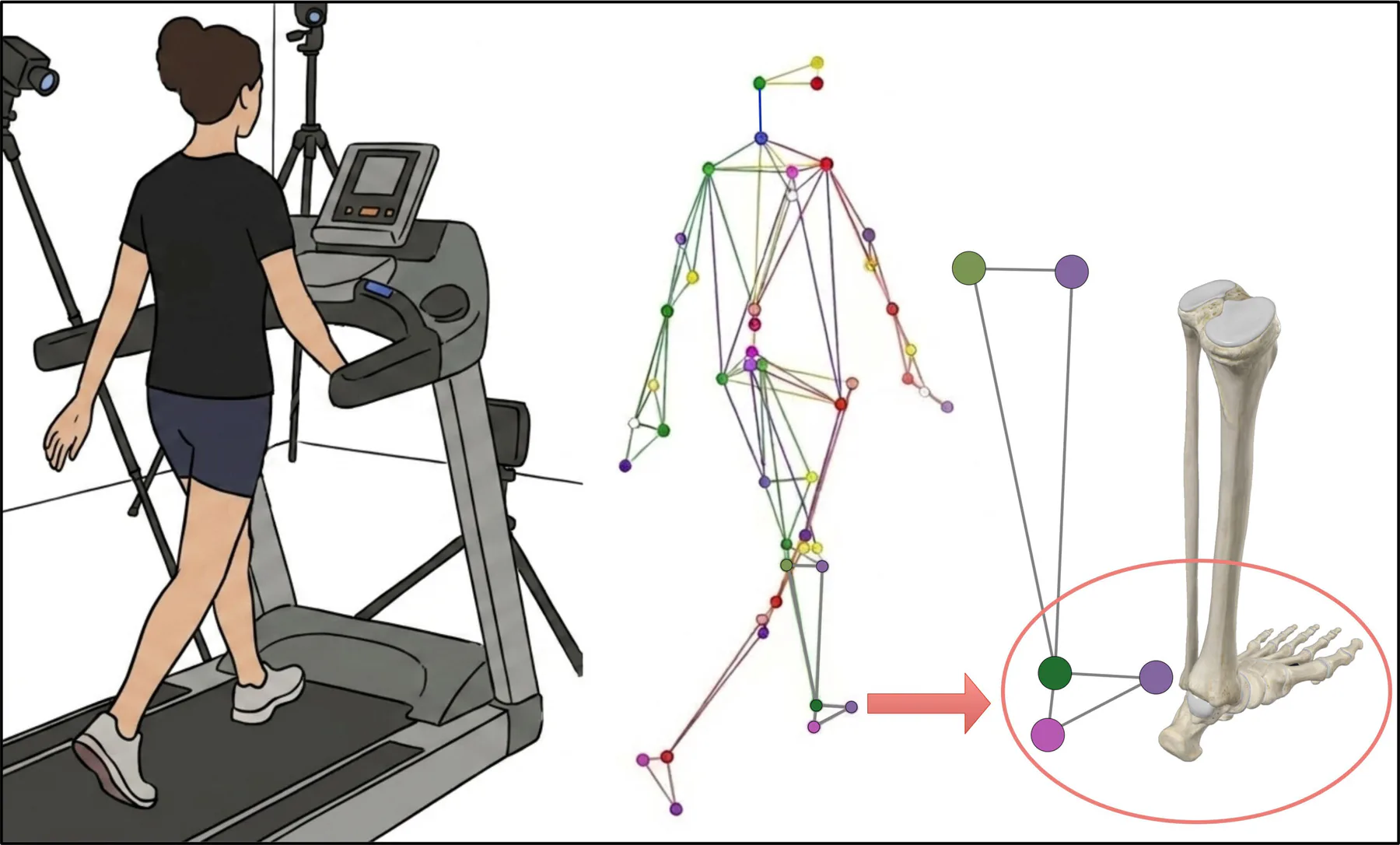
“The footwear industry has primarily evaluated foot movement from the outside using force plates, and video motion capture while modeling the foot as a rigid structure rather than the dynamic, load bearing system it actually is,” they explain. “The foot is the only part of the body in direct contact with the ground, and when you can’t see what is happening inside the shoe, it becomes difficult to recognize when natural foot motion is being restricted.”
The Missing Biomechanical Link
At the center of this oversight is a surprisingly specific, and critical, mechanism: the movement of the big toe joint.
“The biggest biomechanical factor the athletic footwear industry has overlooked is what happens inside the shoe and the chain reaction that occurs when big toe joint movement is restricted,” Dr. Dananberg noted.
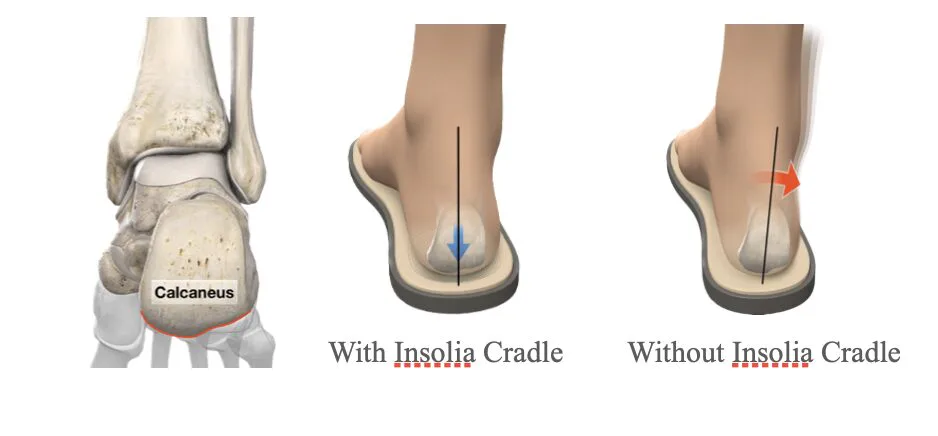
When that joint cannot move freely, the consequences ripple upward through the body. Heel lift becomes inefficient. The arch may collapse. Ankles compensate. Stride mechanics shift. Even posture can be affected.
In other words, a restriction measured in millimeters at the front of the foot can translate into systemic inefficiencies across the entire kinetic chain.
Rethinking Innovation From the Inside Out
What makes this insight particularly disruptive is how it reframes the innovation narrative. For years, performance footwear has leaned into added technologies, more cushioning, more support systems, more structural interventions.
But according to Hughes and Dananberg, that approach may be solving symptoms rather than causes.
“I think the industry has become focused on adding more and more technology to compensate for injury related issues instead of addressing the root biomechanical issue,” Hughes said. “The human foot is an incredibly efficient evolutionary body part designed to transfer weight and propel the body forward,” Dr. Dananberg added.
Their solution is deceptively simple: design shoes that allow the foot to function naturally.
To do this, they have developed a system centered on in shoe pressure analysis, measuring how weight is actually distributed inside the shoe during movement, rather than relying solely on external data points.
The results are difficult to ignore. Independent testing conducted at MIT on cleated shoes equipped with the Insolia Integrated Motion System found a 23% reduction in rotational torque, meaning less stress transferred to the knee, and a 5.5% forward shift in center of pressure during deceleration, positioning the body in a more stable, injury resistant alignment.
A Shift the Industry Can’t Ignore
For an industry built on performance claims, these findings introduce a compelling question: has athletic footwear been optimizing for the wrong variables?
If the future of performance lies not in adding layers of technology but in removing the barriers that restrict natural motion, the implications extend far beyond elite athletes. This is a conversation that touches everyday runners, gym goers, and even the broader wellness market increasingly intersecting with fashion.
In a landscape where consumers are becoming more educated, and more skeptical, about what performance really means, internal biomechanics could become the next frontier of differentiation. Because the next evolution of athletic footwear may not be about what we build into the shoe, but what we finally allow the foot to do on its own.