How to Match Shoes With a Suit: Why Tailoring and Footwear Should Be Chosen Together
Men often leave the shoes until last. The jacket is sitting properly, the trousers have the right break,…
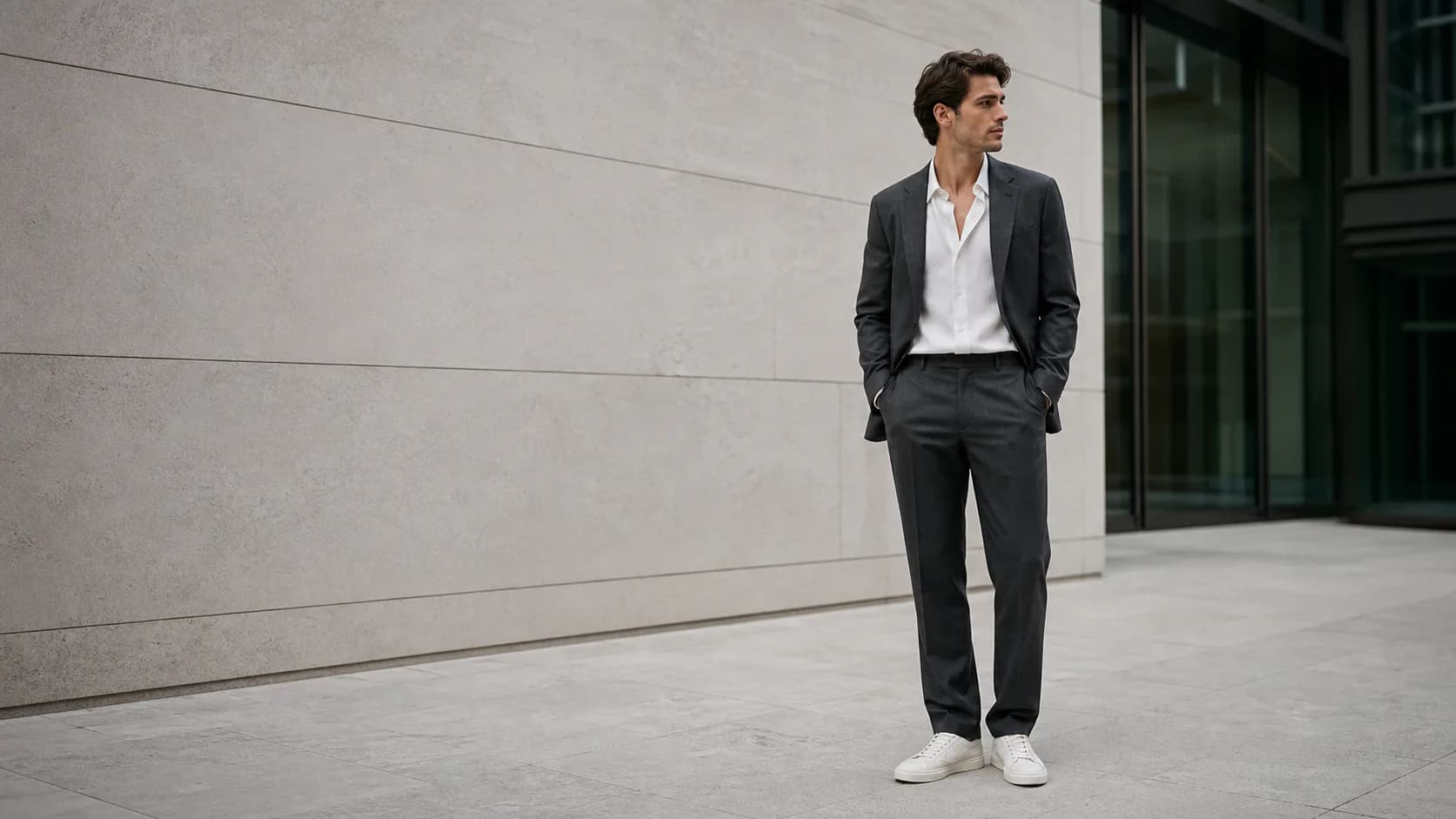
Men often leave the shoes until last. The jacket is sitting properly, the trousers have the right break, the shirt is sorted, and only then do they look down and decide what should go with it.
Sometimes that works, but shoes can change far more than the last few inches of an outfit, including how the tailoring sits overall. It makes more sense to think about the tailoring and the footwear at the same time, especially now that menswear is much less rigid than it used to be. Relaxed suits, roomier trousers, softer jackets, and sneakers have changed how men dress, and shoes now carry far more of the outfit than they once did.
Start With the Shape of the Trouser
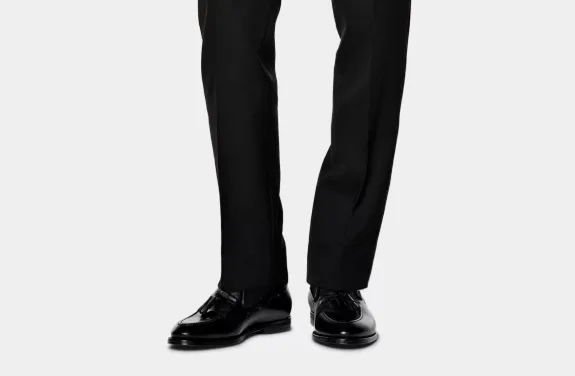
The cut of your trouser is essentially the opening drive, setting the entire formation for what needs to happen next. If you are wearing a slim, tailored route with a clean, no-break finish, a sleek Oxford or Derby can slip right into the pocket and execute. But if you are rocking a wider, fuller pant leg, you need a heavy hitter on the field, meaning something with real physical presence like a chunky loafer or a robust lace-up.
That is one reason choosing a suit should not be separated from footwear decisions. The jacket gets most of the attention in the fitting room, but the line from the trousers to the shoes is what people notice once you are on the move. If the proportions are fighting each other, the outfit never quite settles. Our magazine’s coverage of Christian Louboutin menswear makes this point in a more fashion-forward way, showing how loafers, lace-ups and statement shoes are now being designed with modern tailoring and wider trousers in mind.
The Shoe Can Change the Style and Mood of the Same Suit
A navy suit with black Oxfords still does exactly what it has always done. It feels formal, clean and appropriate for occasions where there is little reason to experiment. Change the shoes, though, and the same suit can move somewhere else entirely. Dark brown Derbies soften it slightly. Suede loafers make it more relaxed. A clean, minimal sneaker can work with the right unstructured suit, particularly when the trousers are cut a little shorter and the whole outfit is clearly intended to feel casual.
Custom Tailoring Should Include the Shoes
The advantage of crafting your own custom suits is not simply that the jacket can be made closer to the body. The more useful part is being able to think about proportion from the beginning. If loafers are what you wear most of the year, choosing trousers that only sit properly over traditional Oxfords makes very little sense. But if Derbies are already part of the wardrobe, the trousers can be cut to sit naturally over their heavier shape.
Loafers Have Changed Formal Dressing
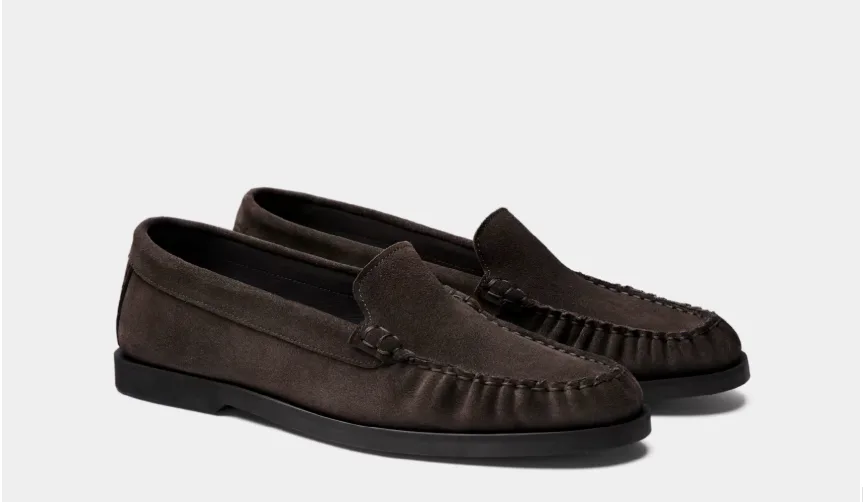
Loafers probably explain the current shift in men’s tailoring better than any other shoe. They can still look polished, but they remove some of the stiffness associated with lace-ups, and with a lightweight suit, a softer shoulder and a slightly shorter trouser, they make sense without looking as though someone has dressed down.
That mix of formal and casual dressing has become pretty normal now, not something you only see in fashion shoots. Our covered article highlighted how footballers and other public figures increasingly wear custom suits with statement footwear, showing just how far menswear has moved from the idea that tailoring always requires the same black dress shoe.
Sneakers Need More Care Than People Think
The phrase “sneakers with a suit” makes it sound easier than it is. Some combinations work because the whole outfit has been built around that contrast. Others simply look like someone changed shoes on the way out of the office.
A sneaker that works with tailoring is usually clean in shape, fairly restrained in colour and not overloaded with technical details. The suit also needs to cooperate. Softer construction, a slightly more casual fabric and trousers that do not pool around the ankle make the pairing far more convincing.
Tailoring Continues Below the Ankle
The best outfits are rarely built from one impressive piece. They work because the proportions carry through from the shoulder to the trouser and then into the shoe. Pulling a winning look together does not mean every piece has to run the exact same scheme. The secret is making sure the contrast looks deliberate, not like an unforced error. Once that part feels right, there is not much point getting hung up on old colour rules or whether something is technically the “correct” pairing. The old rules matter less, and the more useful question is simply which pair makes the tailoring look and feel right.