Foot Locker and Uber Eats Bring Athletic Retail Into the On-Demand Economy
Foot Locker is treating delivery apps as a core retail channel, not a side experiment. In fact, the…
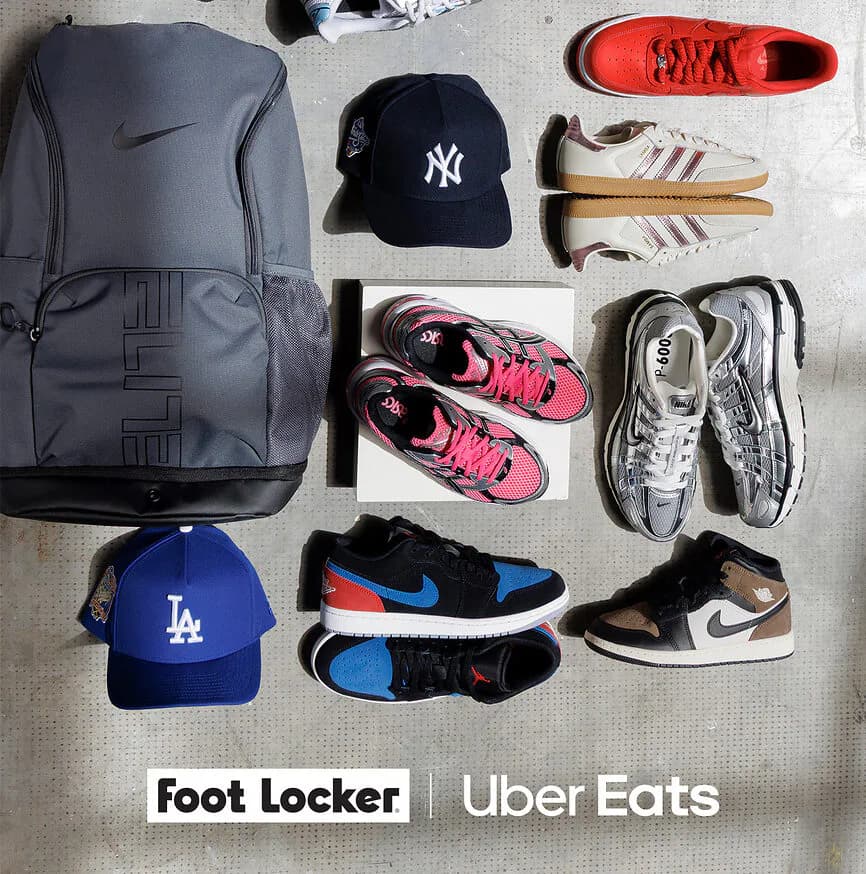
Foot Locker is treating delivery apps as a core retail channel, not a side experiment. In fact, the Foot Locker Uber Eats Partnership stands out as an innovative approach to modern retail. By linking Foot Locker, Kids Foot Locker, and Champs Sports with Uber Eats, the company turns an on‑demand food platform into a new way to shop sneakers, apparel, and accessories with speed. The focus is clear: Foot Locker and Uber Eats bring athletic retail into the on‑demand economy.
Partnership scope and reach
The partnership adds more than 1,000 Foot Locker, Kids Foot Locker, and Champs Sports locations across the U.S. to the Uber Eats marketplace. Shoppers can now browse a broad mix of footwear, clothing, and accessories directly inside the app, then choose on‑demand or scheduled delivery. Orders travel from local stores, which shortens the path from shelf to doorstep and keeps inventory close to the consumer.
This structure gives Foot Locker a new layer of reach. The retailer already operates its own e‑commerce site, apps, and stores, but delivery apps sit closer to everyday routines. Many users open them several times a week, sometimes daily. By appearing in that environment, Foot Locker positions itself where attention already lives rather than asking shoppers to start a separate search or visit a mall.
Timing and back‑to‑school focus
The launch hits just as back‑to‑school shopping ramps up. For families, this is one of the most time‑sensitive periods of the retail calendar. Kids need first‑day outfits, replacement shoes, and gear for sports or activities. Parents juggle lists, work schedules, and tight budgets. Adding Foot Locker and its banners to Uber Eats offers a way to check off items without leaving home.
A parent who realizes the night before school starts that a child’s sneakers no longer fit can now open an app they already use for dinner and order a new pair. That scenario illustrates how the partnership is designed for specific stress points. It turns last‑minute shopping into a manageable task rather than a rushed trip to a store before closing.
Customer experience and convenience
The user journey stays familiar. Customers open the app, tap into the retail section, select a nearby Foot Locker, Kids Foot Locker, or Champs Sports, and scroll through curated assortments. The interface mirrors typical online shopping: product tiles, sizes, and styles arranged in categories. After adding items to the cart, shoppers pick a delivery window and track the driver as they would for food.
This approach lowers friction. Consumers do not need to learn new systems or download extra apps to access urgent footwear and apparel. Instead, they extend an existing habit into a new category. That ease is central to the idea of “speed and convenience” that Foot Locker references. It is also crucial for Uber Eats as the platform pushes deeper into retail and wants users to see it as a one‑stop hub for many needs, not only meals.
Strategic impact for both brands
For Foot Locker, the partnership supports a broader shift toward omnichannel convenience. Same‑day and on‑demand fulfillment now happen through delivery platforms as well as the company’s own services. This diversification spreads risk and increases the number of doors through which customers can enter the brand ecosystem. It also positions Foot Locker competitively against rivals that already experiment with same‑day and quick‑commerce options.
For Uber Eats, adding Foot Locker, Kids Foot Locker, and Champs Sports strengthens its retail credentials. The marketplace already includes beauty, home improvement, electronics, and sporting goods. Footwear and athletic apparel deepen that lineup. Each new category gives users another reason to open the app and reinforces the idea that they can solve a wide range of tasks from a single interface.
Implications for sneaker and sportswear retail
This collaboration highlights how sneaker and sportswear retail now extends beyond traditional channels. Enthusiasts still line up for key releases or queue online for drops, but everyday purchases are shifting toward whatever platform feels fastest in the moment. Delivery apps bring streetwear and athletic product into the same decision space as food and groceries.
For players, fans, and collectors, access changes shape. A pair of Jordans or a kids’ back‑to‑school shoe can arrive with the same speed as a pizza. That reality may reshape how people think about urgency and planning. Missed releases remain a separate issue, but for general assortment, the expectation of rapid delivery becomes normal. Brands that can plug into these systems gain an advantage with time‑sensitive shoppers.
The move also raises questions about how retail storytelling will adapt. As platforms feature more categories, product tiles share space with other goods and experiences. To stand out, Foot Locker and its banners will need to balance functional listings with clear, concise cues about brand and style. That challenge mirrors what they already face on their own sites, but with less control over the overall environment.
In that context, Foot Locker and Uber Eats bring athletic retail into the on‑demand economy describes more than a single partnership. It marks a step in how sportswear reaches consumers, meeting them inside everyday digital habits, alongside the rest of their lives, and making sneakers one more thing that can arrive at the door in under an hour.